Ion Exchange
Ion Exchange Technology for Water Recycling
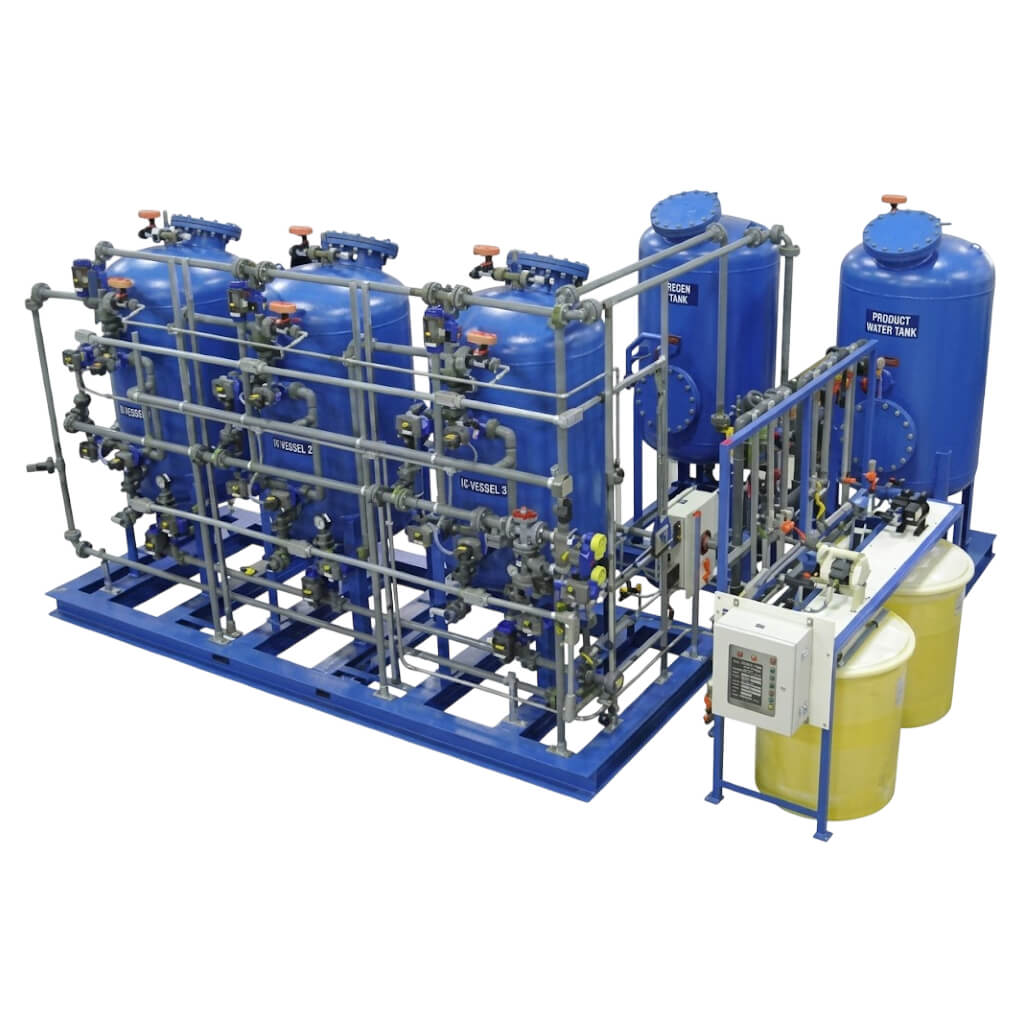
Ion exchange is a proven chemical process that removes dissolved heavy metals, hardness ions, and water salts. Ion exchange technology transforms wastewater into a valuable resource, delivering consistent water quality, lower operating costs, and environmental compliance. It’s a cornerstone for sustainable, efficient, and cost-effective metal finishing processes.
- Water Recycling & Reuse: Produces high-purity rinse water for reuse in plating lines, reducing freshwater consumption.
- Metal Recovery: Concentrates dissolved metals into regenerant solutions for recovery or safe disposal.
- Pollution Control: Removes metals to meet discharge limits and environmental regulations.
- Zero-Discharge Systems: Enables closed-loop rinse water systems, minimizing wastewater discharge and supporting sustainability goals.
How It Works
Key Benefits and Advantages
- Superior Water Purity & Quality
- Produces ultrapure water ideal for rinses
- Effectively removes heavy metals, salts, and hardness ions, ensuring consistent plating quality.
- Significant Water Savings
- Reduces freshwater demand by up to 90–99% through rinse water recirculation.
- Supports sustainability initiatives and lowers utility costs.
- Regulatory Compliance
- Meets stringent discharge standards for heavy metals and other contaminants.
- Helps avoid fines and environmental risks.
- Metal Recovery & Resource Efficiency
- Captures valuable metals from dilute rinse waters for reuse or resale.
- Turns waste into a resource, reducing disposal costs.
- Cost Reduction
- Cuts chemical treatment and sludge disposal expenses.
- Lowers operating costs by reducing water purchases and wastewater treatment needs.
- Operational Advantages
- Scalable & Modular: Easily integrated into existing plating lines and adaptable to changing production needs.
- Automation: Can be fully automated for minimal operator intervention.
- Compact Footprint: Provides high capacity in a small space.
- Resin Regeneration: Extends resin life and reduces waste.
- Environmentally Friendly
- Supports zero-discharge initiatives and sustainable operations by closing the water loop.
Why PSI Makes the Difference
- Your Trusted Knowledge Source – Expert guidance for process optimization
- Save Valuable Time – Streamlined solutions and technical support
- Reduce Costs – Minimize coating failures and rework
- Empower Better Outcomes – Achieve consistent, high-quality finishes
- Your Single Source – Chemicals, equipment, and expertise in one place
- Water Recycling & Reuse: Produces high-purity rinse water for reuse in plating lines, reducing freshwater consumption.
- Metal Recovery: Concentrates dissolved metals into regenerant solutions for recovery or safe disposal.
- Pollution Control: Removes metals to meet discharge limits and environmental regulations.
- Zero-Discharge Systems: Enables closed-loop rinse water systems, minimizing wastewater discharge and supporting sustainability goals.
How It Works
Key Benefits and Advantages
- Superior Water Purity & Quality
- Produces ultrapure water ideal for rinses
- Effectively removes heavy metals, salts, and hardness ions, ensuring consistent plating quality.
- Significant Water Savings
- Reduces freshwater demand by up to 90–99% through rinse water recirculation.
- Supports sustainability initiatives and lowers utility costs.
- Regulatory Compliance
- Meets stringent discharge standards for heavy metals and other contaminants.
- Helps avoid fines and environmental risks.
- Metal Recovery & Resource Efficiency
- Captures valuable metals from dilute rinse waters for reuse or resale.
- Turns waste into a resource, reducing disposal costs.
- Cost Reduction
- Cuts chemical treatment and sludge disposal expenses.
- Lowers operating costs by reducing water purchases and wastewater treatment needs.
- Operational Advantages
- Scalable & Modular: Easily integrated into existing plating lines and adaptable to changing production needs.
- Automation: Can be fully automated for minimal operator intervention.
- Compact Footprint: Provides high capacity in a small space.
- Resin Regeneration: Extends resin life and reduces waste.
- Environmentally Friendly
- Supports zero-discharge initiatives and sustainable operations by closing the water loop.
Why PSI Makes the Difference
- Your Trusted Knowledge Source – Expert guidance for process optimization
- Save Valuable Time – Streamlined solutions and technical support
- Reduce Costs – Minimize coating failures and rework
- Empower Better Outcomes – Achieve consistent, high-quality finishes
- Your Single Source – Chemicals, equipment, and expertise in one place