Mixers
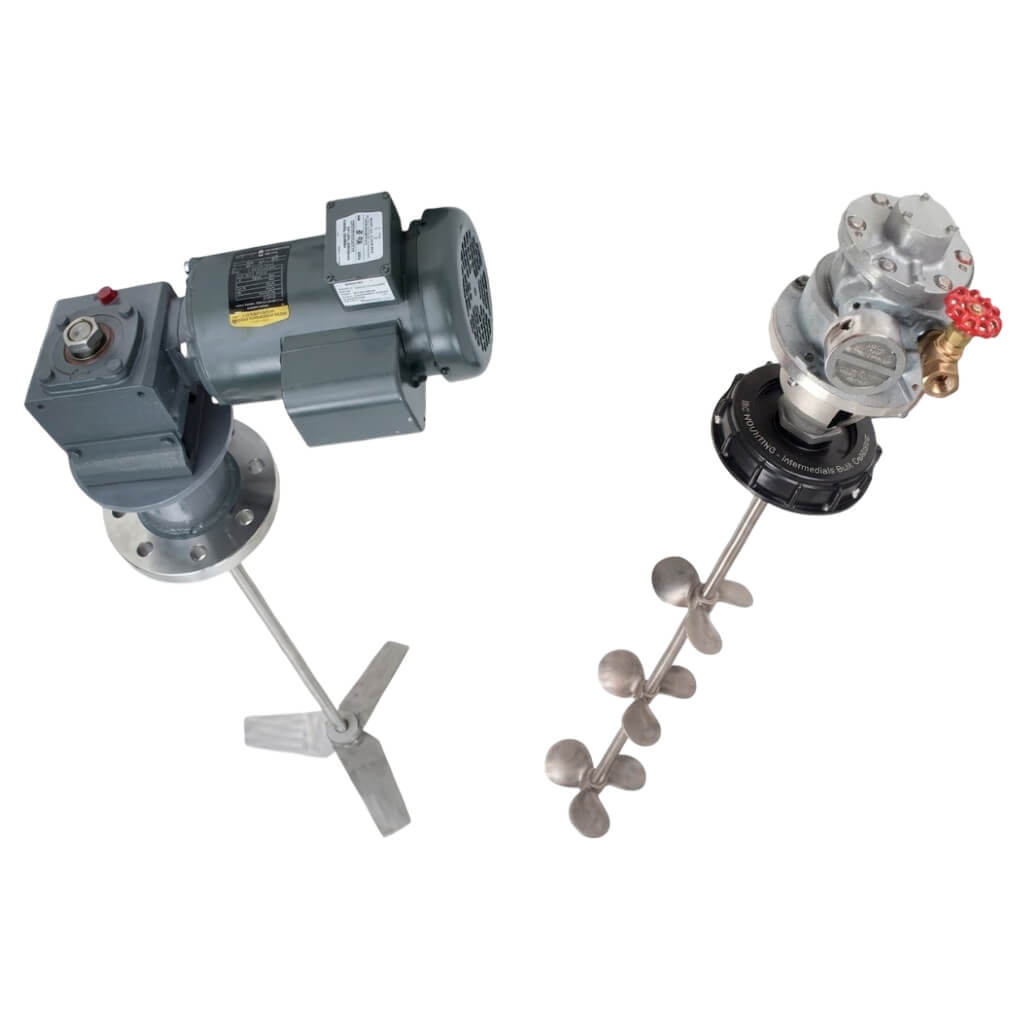
Mixers play a critical role in metal hydroxide precipitation systems, ensuring uniform chemical distribution and efficient treatment. When waste treatment chemistries (e.g., sodium hydroxide, lime) are added to precipitate dissolved metals, proper mixing delivers:
- Consistent pH Adjustment: Achieves the optimal pH for metal precipitation.
- Complete Chemical Reaction: Promotes full interaction between metal ions and hydroxide ions.
- Prevention of Localized Overdosing: Avoids poor floc formation or re-solubilization of metals.
- Improved Treatment Efficiency: Maintains solids in suspension, controls odors, and prevents short-circuiting in tanks.
Types of Mixers
- High-Speed Mechanical Mixers
- Used in neutralization and flash flocculation tanks for rapid chemical reactions.
- Often paired with pH probes and chemical feed systems for precision.
- Static Mixers
- In-line devices with fixed elements for turbulence without moving parts.
- Ideal for continuous flow systems; low maintenance and energy-efficient.
- Paddle or Turbine Mixers
- Paddle mixers provide gentle mixing for floc growth.
- Turbine mixers create radial flow for gas-liquid dispersion in larger tanks.
- Anchor & Helical Ribbon Mixers
- Designed for high-viscosity sludge tanks to prevent solids from settling.
- Ensure uniform mixing in concentrated waste streams.
Key Functions
Role in Process Stages
Advantages of Proper Mixing
- Improved Precipitation Efficiency: Metals reach solubility minimum at target pH.
- Reduced Chemical Waste: Uniform mixing minimizes overdosing and cost.
- Enhanced Sludge Quality: Promotes settleable flocs, reducing sludge volume and improving dewatering.
Why PSI Makes the Difference
- Your Trusted Knowledge Source – Expert guidance for process selection and compliance
- Save Valuable Time – Streamlined implementation and technical support
- Reduce Costs – Lower waste treatment and energy consumption
- Empower Better Outcomes – Achieve consistent, high-quality finishes
- Your Single Source – Chemicals, equipment, and expertise in one place
Types of Mixers
- High-Speed Mechanical Mixers
- Used in neutralization and flash flocculation tanks for rapid chemical reactions.
- Often paired with pH probes and chemical feed systems for precision.
- Static Mixers
- In-line devices with fixed elements for turbulence without moving parts.
- Ideal for continuous flow systems; low maintenance and energy-efficient.
- Paddle or Turbine Mixers
- Paddle mixers provide gentle mixing for floc growth.
- Turbine mixers create radial flow for gas-liquid dispersion in larger tanks.
- Anchor & Helical Ribbon Mixers
- Designed for high-viscosity sludge tanks to prevent solids from settling.
- Ensure uniform mixing in concentrated waste streams.
Key Functions
Role in Process Stages
Advantages of Proper Mixing
- Improved Precipitation Efficiency: Metals reach solubility minimum at target pH.
- Reduced Chemical Waste: Uniform mixing minimizes overdosing and cost.
- Enhanced Sludge Quality: Promotes settleable flocs, reducing sludge volume and improving dewatering.
Why PSI Makes the Difference
- Your Trusted Knowledge Source – Expert guidance for process selection and compliance
- Save Valuable Time – Streamlined implementation and technical support
- Reduce Costs – Lower waste treatment and energy consumption
- Empower Better Outcomes – Achieve consistent, high-quality finishes
- Your Single Source – Chemicals, equipment, and expertise in one place