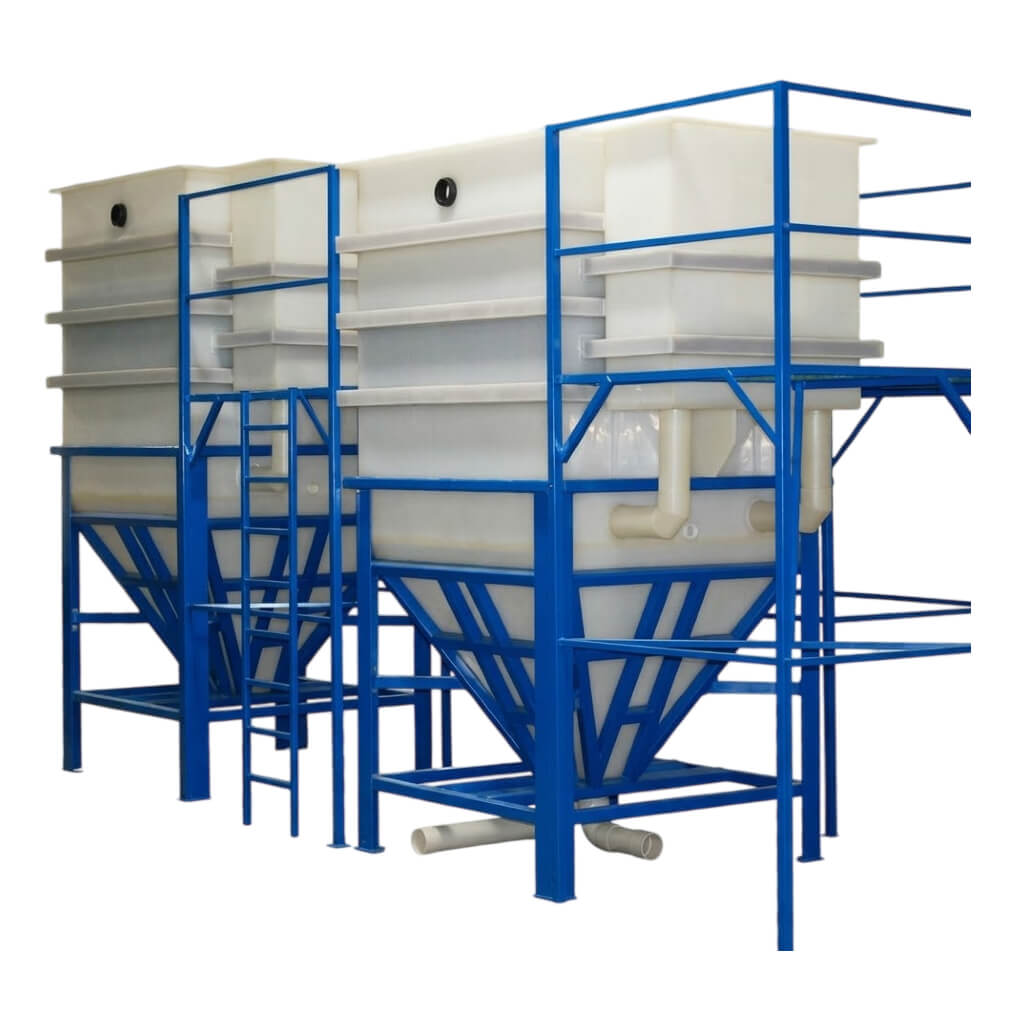
Tanks
Tanks for Wastewater Treatment
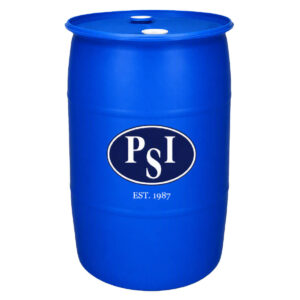
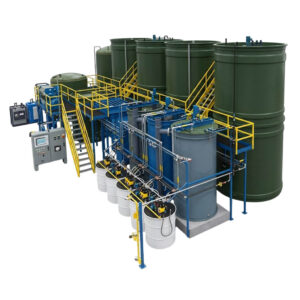
Tanks are the backbone of any metal finishing wastewater treatment system. They provide safe containment and controlled environments for critical treatment stages, ensuring compliance, efficiency, and reliability. Properly designed tanks ensure safe chemical handling, efficient treatment, and long-term reliability. By selecting the right material and configuration, facilities can reduce downtime, extend equipment life, and maintain compliance.
Key Benefits
- Process Efficiency
- Maintains proper volume and retention time for consistent chemical reactions.
- Reduces shock loads on downstream equipment like clarifiers and filter presses.
- Operational Flexibility
- Supports batch or continuous flow systems.
- Customizable in size, shape, and configuration to fit plant layouts.
- Safety & Compliance
- Provides secure containment for hazardous chemicals and metal-bearing solutions.
- Helps meet regulatory standards by preventing spills and environmental exposure.
- Cost Control
- Durable construction minimizes maintenance and replacement costs.
- Compatible with liners and coatings to extend service life.
Materials of Construction
Choosing the right material ensures durability, chemical resistance, and operational safety:
- Polyethylene (PE): Lightweight, non-conductive, highly resistant to acids and alkalis; ideal for plating baths, cleaners, and rinse tanks.
- Stainless Steel (304/316L): Exceptional corrosion resistance and strength; handles high temperatures and aggressive chemistries; conductive for electroplating.
- PVC Drop-In Liners: Chemical-resistant barrier for existing tanks; extends tank life and allows quick repairs.
- Fiberglass Reinforced Plastic (FRP): Excellent corrosion resistance and structural integrity; suitable for large tanks and harsh environments.
- Concrete: Strong and durable for large stationary tanks; typically lined or coated for chemical resistance.
- HDPE (High-Density Polyethylene): Tough, lightweight, and chemical-resistant; used for liners or standalone tanks in corrosive environments.
Why PSI Makes the Difference
- Your Trusted Knowledge Source – Expert guidance for process optimization
- Save Valuable Time – Streamlined solutions and technical support
- Reduce Costs – Minimize coating failures and rework
- Empower Better Outcomes – Achieve consistent, high-quality finishes
- Your Single Source – Chemicals, equipment, and expertise in one place
Key Benefits
- Process Efficiency
- Maintains proper volume and retention time for consistent chemical reactions.
- Reduces shock loads on downstream equipment like clarifiers and filter presses.
- Operational Flexibility
- Supports batch or continuous flow systems.
- Customizable in size, shape, and configuration to fit plant layouts.
- Safety & Compliance
- Provides secure containment for hazardous chemicals and metal-bearing solutions.
- Helps meet regulatory standards by preventing spills and environmental exposure.
- Cost Control
- Durable construction minimizes maintenance and replacement costs.
- Compatible with liners and coatings to extend service life.
Materials of Construction
Choosing the right material ensures durability, chemical resistance, and operational safety:
- Polyethylene (PE): Lightweight, non-conductive, highly resistant to acids and alkalis; ideal for plating baths, cleaners, and rinse tanks.
- Stainless Steel (304/316L): Exceptional corrosion resistance and strength; handles high temperatures and aggressive chemistries; conductive for electroplating.
- PVC Drop-In Liners: Chemical-resistant barrier for existing tanks; extends tank life and allows quick repairs.
- Fiberglass Reinforced Plastic (FRP): Excellent corrosion resistance and structural integrity; suitable for large tanks and harsh environments.
- Concrete: Strong and durable for large stationary tanks; typically lined or coated for chemical resistance.
- HDPE (High-Density Polyethylene): Tough, lightweight, and chemical-resistant; used for liners or standalone tanks in corrosive environments.
Why PSI Makes the Difference
- Your Trusted Knowledge Source – Expert guidance for process optimization
- Save Valuable Time – Streamlined solutions and technical support
- Reduce Costs – Minimize coating failures and rework
- Empower Better Outcomes – Achieve consistent, high-quality finishes
- Your Single Source – Chemicals, equipment, and expertise in one place